A damaged, worn, or weakened tooth can affect much more than your smile. It can change the way you eat, speak, and feel your appearance. That is why so many patients start looking for dental crowns in Medellin when they want a solution that restores both function and aesthetics in a professional, well-planned way. In modern restorative and cosmetic dentistry, dental crowns are one of the most trusted treatments because they are designed to protect a compromised tooth, improve its shape and strength, and help it blend naturally with the rest of the smile.
For many international patients, choosing dental crowns in Medellin is more than finding treatment abroad. It is about receiving quality care, personalized attention, and a smooth experience from evaluation to results. At Dharma Dental, part of the Clínica Be Dharma brand, this treatment is approached with a focus on clinical criteria, aesthetics, and patient comfort, making it a strong option for people seeking natural-looking results in a premium medical environment.
What is a Dental Crown and when is it recommended?
A dental crown is a custom-made restoration that covers a tooth when it has been weakened, damaged, or structurally compromised. Its purpose is not only to improve how the tooth looks, but also to protect it, reinforce it, and help restore normal function. In many cases, a crown allows the tooth to keep working properly instead of becoming more fragile over time.
What is a Dental Crown?
A dental crown is a cap that is placed over a tooth to restore its shape, strength, and appearance. It is commonly recommended when a tooth can no longer be predictably protected with a filling alone. Because it covers the visible part of the tooth, it helps shield it from further damage while also improving the way it looks within the smile.
It is also important to understand that the word “crown” can refer to two different things. On one hand, there is the natural crown of the tooth, which is the part of the tooth that normally sits above the gum line. On the other hand, there is the artificial dental crown used as treatment, which is designed to cover and protect that visible part when the tooth has been affected by damage, wear, or previous dental work.
The Crown of the Tooth: Understanding this part of the tooth
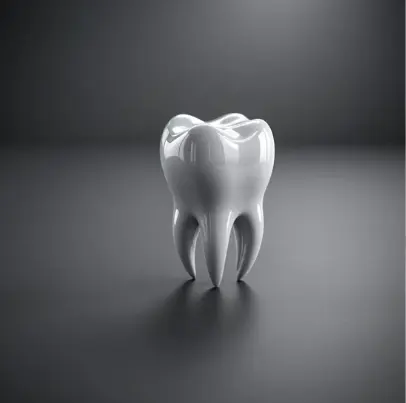
When talking about tooth crown anatomy, the crown is simply the visible portion of the tooth above the gums. It is the part you see when you smile, and the area that carries most of the forces of chewing and biting.
Understanding the crown of the tooth makes it easier to see why crowns are such a common treatment. If that visible structure becomes weak, cracked, heavily restored, or worn down, the tooth may need more than a small repair. In those situations, a crown can help protect what remains and restore a more stable shape.
When do you need a Dental Crown?
Not every damaged tooth needs a crown, but there are situations where it may be one of the most reliable options.
A dentist may recommend a crown when a tooth has:
- Significant damage or decay that has weakened its structure
- A fracture or crack that needs protection
- A large filling with not enough healthy tooth left to support it
- Undergone root canal treatment and needs reinforcement
- Become worn down over time from grinding or heavy use
- Aesthetic concerns that can be improved with the right restorative plan
In other words, a crown is often recommended when the goal is to protect the tooth, restore function, and improve appearance at the same time. For many patients, that combination is exactly why dental crowns remain one of the most useful treatments in modern restorative and cosmetic dentistry.
Types of Dental Crowns: Which option is right for you?
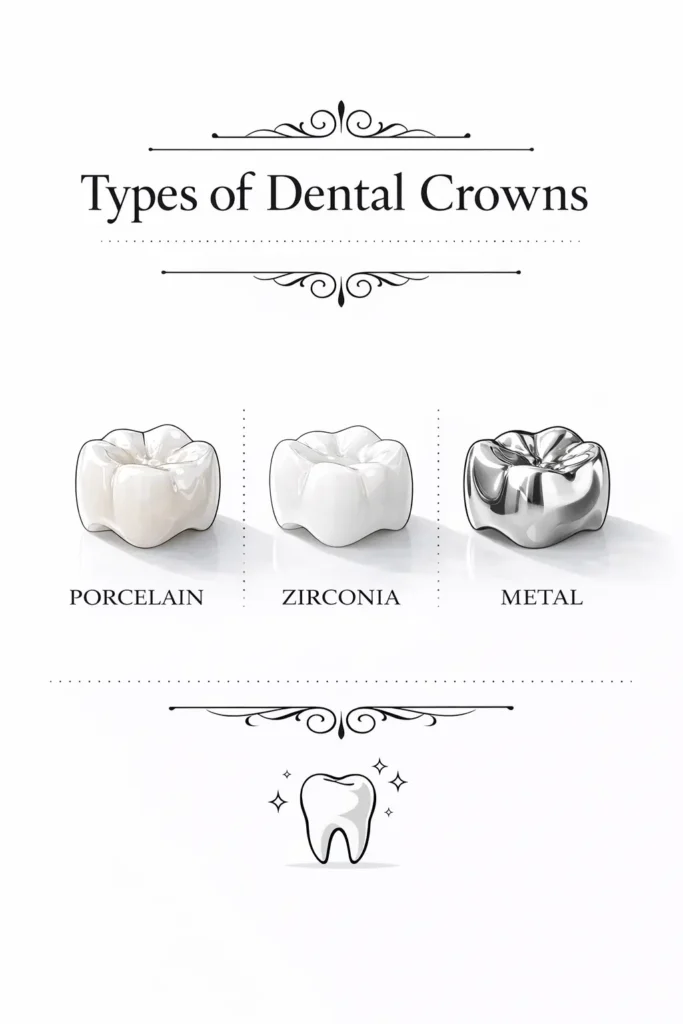
When patients start researching types of dental crowns, they often expect there to be one option that is clearly better than all the others. The best choice depends on several factors: how much strength the tooth needs, where the tooth is located, how visible it is when you smile, and what kind of result you want in the long term. A crown that works well for a back molar may not be the best fit for a front tooth, and that is why proper clinical evaluation matters so much.
There are several common types of dental crowns, and each one has different advantages. Some are chosen mainly for aesthetics, others for strength, and some for their balance between the two. Rather than thinking of crowns in terms of “best” or “worst,” it is more accurate to think in terms of which material makes the most sense for your specific case.
The decision usually comes down to four key factors:
- Function: how much chewing pressure the tooth handles
- Tooth location: whether it is in a highly visible area or farther back
- Aesthetic goals: how natural and seamless you want the crown to look
- Clinical condition: how much healthy tooth structure remains and what kind of support is available
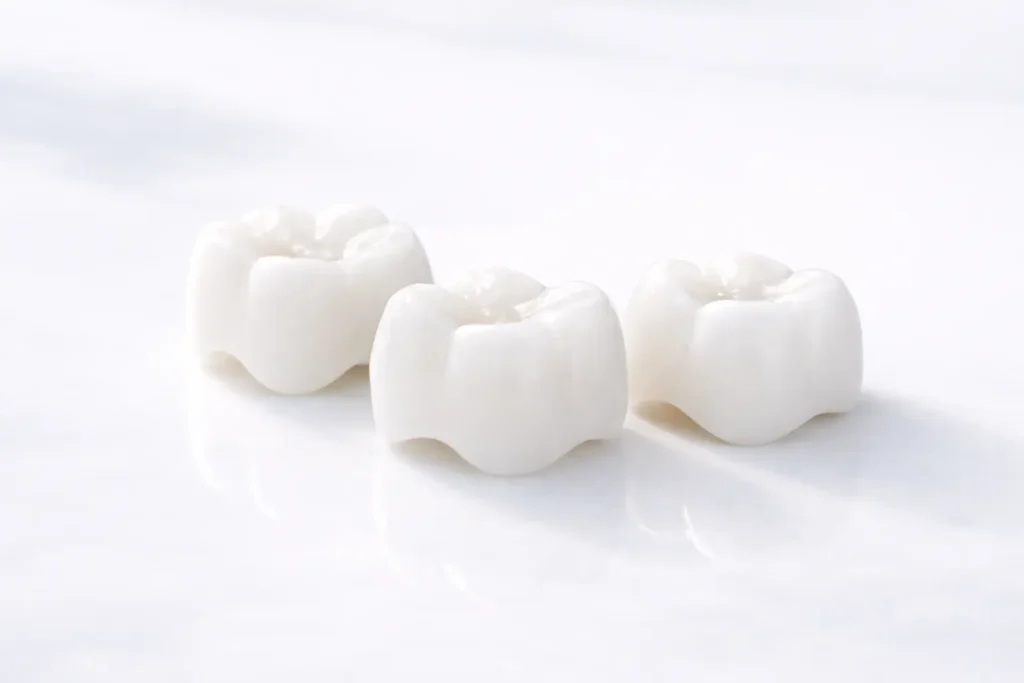
Porcelain and Ceramic Crowns
Porcelain crowns and ceramic crowns are often recommended when appearance is a major priority. They are especially popular for front teeth or other visible areas because they can be designed to blend naturally with the rest of the smile in shape, translucency, and color.
For patients who want a more refined cosmetic result, these materials are often appealing because they can look very natural under normal light. They are commonly considered when the goal is not only to restore the tooth, but also to preserve harmony within the smile.
They are often preferred for:
- Front teeth
- Teeth that show when smiling or speaking
- Patients who prioritize natural-looking results
- Cases where smile aesthetics are a major concern
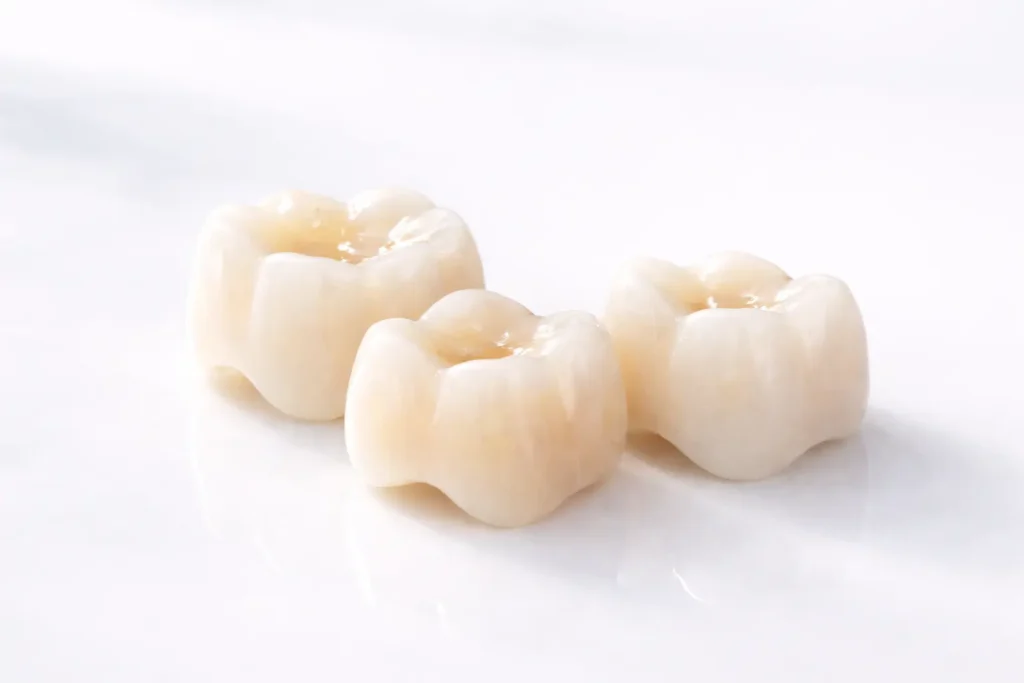
Zirconia Crowns
Zirconia crowns are widely valued for their strength and durability. They are often a strong option for patients who want a restoration that can handle daily function while still offering a pleasing appearance. For that reason, zirconia is frequently seen as a good middle ground between resilience and aesthetics.
This type of crown may be especially attractive for patients who want long-term reliability without completely compromising the look of the tooth. Depending on the case, zirconia can work well in both visible and functional areas of the mouth.
Why many patients consider zirconia:
- Excellent strength
- High durability over time
- Good option for both function and aesthetics
- Often suitable for areas exposed to significant biting forces
Metal Dental Crown
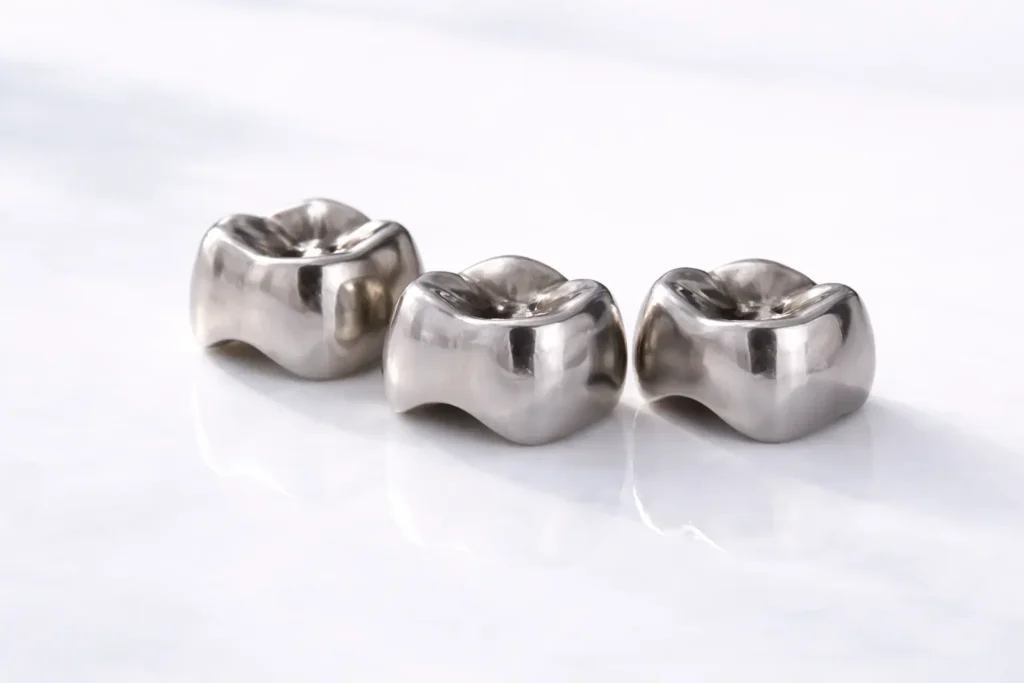
A metal dental crown is not usually the first choice for patients who are focused on aesthetics, but it can still make clinical sense in certain situations. Metal crowns have traditionally been valued for their resistance and longevity, especially in back teeth where appearance is less important and chewing forces are stronger.
Although a metal dental crown is less natural-looking than porcelain, ceramic, or zirconia, it may still be considered for some posterior teeth when durability is the main concern. In other words, it is not always the most cosmetic option, but it can still be a practical one in the right case.
A metal crown may be considered when:
- The tooth is located in the back of the mouth
- Function is a bigger priority than appearance
- The case calls for a highly durable restoration
- The patient needs restoration for heavy biting pressure
Permanent Dental Crown vs Temporary solutions
When patients hear the word “crown,” they often assume there is only one type involved in the process. There is an important difference between a temporary restoration and the final one. Understanding that difference helps patients know what to expect and why treatment is usually completed in stages.
What is a permanent Dental Crown?
A permanent dental crown is the final restoration placed over a tooth for long-term use. It is custom-made to fit the prepared tooth, restore strength, support daily function, and blend as naturally as possible with the rest of the smile. Unlike a temporary solution, it is designed to provide stability, comfort, and durability over time.
Its purpose goes beyond appearance alone. A final crown helps protect a weakened tooth, improve chewing, and restore a more balanced shape when the original structure has been compromised. That is why the definitive crown is carefully planned according to the patient’s bite, the location of the tooth, and the desired aesthetic result.
Is a fixed Dental Crown the same as a permanent one?
The term fixed dental crown is sometimes used to describe a crown that is cemented in place and meant to remain attached to the tooth. In everyday communication, it is often used in a similar way to permanent dental crown.
Still, permanent dental crown tends to sound more natural and clearer for patients, especially when explaining the final stage of treatment. In practical terms, both expressions point to the same idea: this is the definitive restoration, not a short-term or removable option.
Temporary vs Permanent Dental Crown
A temporary crown is usually placed to protect the tooth while the final restoration is being made. It serves an important purpose during treatment, but it is not intended to function as the long-term result.
A permanent dental crown, by contrast, is the final version. It is more refined in its fit, more durable in daily use, and more carefully developed in terms of shape, comfort, and appearance. During the process, patients may first wear temporary restoration for a short period and then return for placement of the definitive crown once it is ready.
In general, patients can expect this sequence:
- The tooth is evaluated and prepared
- A temporary solution may be placed if needed
- The final crown is fabricated based on the treatment plan
- The permanent dental crown is checked and cemented once everything is ready

Dental Crown procedure: What to expect from start to finish
For many international patients, one of the most important questions is not only what a crown is, but how the entire process works. Knowing the main stages of treatment can make the experience feel much more predictable and easier to plan.
Initial Evaluation and Treatment Planning
The process begins with a professional assessment of the tooth and the overall condition of the smile. This step is essential because not every damaged tooth automatically needs a crown. The dental team first needs to determine whether a crown is the right option and, if so, what type of restoration makes the most sense.
This first stage may include: A clinical examination, digital assessment or imaging when necessary, evaluation of function, bite, and tooth structure, discussion of aesthetic goals and treatment expectations
For patients traveling to Medellin, this stage is especially important because it helps create a treatment plan that feels realistic, organized, and personalized.
Tooth Preparation and Impressions
Once a crown is recommended, the tooth is prepared so the restoration can fit properly. This means the tooth is carefully shaped to create the space needed for the crown to sit securely and naturally.
After preparation, the next step is recording the exact shape of the tooth and how it relates to the bite. This can be done with traditional impressions or with a digital scan, depending on the clinical workflow. The goal is to make sure the final crown is precise, comfortable, and well adapted to the patient’s mouth.
At this point, some patients may receive a temporary crown while the final restoration is being fabricated.
Placement of the Final Crown
When the final crown is ready, it is placed and evaluated before it is permanently cemented. This visit is about much more than simply attaching the restoration. The dental team carefully checks how the crown fits, how it feels, and how it functions within the bite.
Before final placement, the dentist typically reviews: Overall fit on the tooth, comfort in the mouth, bite alignment, harmony with surrounding teeth, final appearance when relevant
Once those details are confirmed, the crown is cemented in place. The result should feel stable, functional, and natural as part of the smile.
How Long Does the Dental Crown Process Take?
The timeline can vary depending on the complexity of the case, the material selected, and the treatment workflow used by the clinic. For international patients, that makes planning especially important.
Rather than offering rigid timelines, it is more accurate to say that some cases move faster than others depending on the clinical condition of the tooth and the type of restoration being made. A well-organized evaluation helps patients understand what may be possible during their stay in Medellin and whether the treatment can be coordinated in a way that is both efficient and clinically appropriate.

Dental Crown before and after: What changes can you expect?
When patients search for dental crown before and after, they are usually thinking about appearance first. That makes sense. But the change is often about much more than how a tooth looks in a photo. In many cases, the real value of a crown is that it helps restore structure, improve comfort, and protect a tooth that could otherwise continue to weaken over time.
Dental Crown before and after: Functional improvements
From a functional perspective, the difference can be significant. A damaged, worn, or heavily restored tooth may feel less stable during everyday use. Once properly treated, a crown can help bring back support and improve how that tooth performs.
Some of the most important functional changes may include:
- Better protection for weakened teeth
- Improved strength during daily use
- More comfortable chewing
- Greater stability after extensive damage or treatment
- Reduced risk of further structural breakdown
This is one of the reasons dental crowns are so widely used in restorative dentistry. The goal is not only to repair what is visible, but to help the tooth function more predictably in the long term.
Dental Crown before and after: Aesthetic improvements
A well-planned crown can also create an important aesthetic improvement, especially when the original tooth has changed in shape, color, or overall appearance. In the right case, the “after” is not about making the tooth look artificial or overly perfect. It is about helping it look healthy, balanced, and in harmony with the rest of the smile.
Aesthetic improvements may involve:

- Restoring a more natural tooth shape
- Improving color consistency
- Correcting visible wear or irregular contours
- Helping the tooth blend more naturally with nearby teeth
- Creating better smile harmony overall
When treatment is thoughtfully planned, dental crown before and after results should look refined rather than obvious. The best outcome is often the one that does not draw attention to the restoration itself.
What makes a Dental Crown look natural?
Natural-looking results do not happen by chance. They depend on a combination of clinical judgment, material selection, and attention to detail.
A crown tends to look more natural when the treatment team considers:
- The right material for the tooth and its location
- Shade matching with the surrounding teeth
- Proper tooth proportions
- Bite and smile balance
- The overall harmony of the restoration within the face and smile
That is why choosing a crown is not just about placing a restoration. It is about designing one that fits the tooth functionally and visually, so the result feels comfortable and looks believable.
Dental Crown cost in Colombia and Medellin
For many international patients, cost is part of the decision-making process. That is understandable. Still, it is important to approach the topic with the right expectations: the value of treatment is not based on price alone, but on the quality of care, the planning behind the case, and the type of restoration being recommended.
How much does a Dental Crown cost in Colombia?
The final dental crown cost in Colombia can vary from one patient to another. There is no single universal fee that applies to every case, because treatment depends on the condition of the tooth, the material selected, and the overall restorative plan.
In practical terms, the cost may reflect factors such as:
- The clinical needs of the tooth
- The type of crown being recommended
- Whether one or several crowns are needed
- The complexity of the case
- Whether additional treatment is necessary before the crown is placed

That is why a professional evaluation is so important. It allows the treatment team to recommend the most appropriate option instead of reducing the decision to price alone.
Dental Crown Price: What can influence the cost?
When patients look up dental crown price, they are often trying to understand why costs can differ so much. The answer usually comes down to the details of the case.
Some of the main factors that can influence dental crown price include:
- Material: porcelain, ceramic, zirconia, or metal-based options may involve different costs
- Number of crowns: a single crown is different from a broader restorative plan
- Tooth condition: a heavily damaged tooth may require more preparation or additional treatment
- Complementary procedures: some cases may involve prior care, such as endodontic treatment or foundational restoration
Looking at cost this way gives patients a more realistic view of treatment. It also helps explain why a crown is not simply a product, but part of a personalized dental plan.
Why many international patients compare Dental Crowns in Medellin
Patients researching dental crowns in Medellin are often comparing more than numbers. They are also evaluating the overall treatment experience. For international patients, the decision usually involves a combination of clinical quality, communication, convenience, and confidence in the process.
Common reasons why patients compare dental crowns in Medellin include:

The search for high-quality care
Interest in personalized attention
The importance of clear treatment planning
The appeal of combining treatment with travel
The desire for a well-coordinated experience in a recognized medical environment
For many people, the real question is not simply “How much does it cost?” but rather “Where can I receive the right treatment with confidence?” That is what makes the provider, the planning, and the patient experience so important.
How to choose the best type of Dental Crown
Choosing a crown is not about finding the most popular material or the one someone else used successfully. The right option depends on the specific tooth, the condition of that tooth, and what the patient needs from both a functional and aesthetic standpoint.
The best Crown depends on your clinical case
There is no single crown that is automatically the best for everyone. Some patients need a restoration that prioritizes aesthetics in a visible area. Others need more strength because the tooth absorbs greater biting force. In many cases, the best result comes from balancing both.
That is why the final decision should always be based on professional evaluation. A proper assessment helps determine whether the case calls for more durability, more cosmetic refinement, or the right combination of both.
Factors that matter when choosing a Crown
Several factors can influence which crown makes the most sense for a patient. Looking at these points together usually leads to a more informed decision:
- Strength: how much support the tooth needs during daily function
- Aesthetics: how natural the crown should look in the smile
- Tooth location: whether it is a front tooth or a posterior tooth
- Longevity: what kind of long-term performance is expected
- Budget: how the treatment plan aligns with the patient’s priorities
The best decisions are usually the ones made with a full understanding of both the clinical needs and the desired result.
You might be interested in Be Dharma Dental: Cosmetic Dentistry in Medellín
Clinical perspective on dental crowns
According to Cleveland Clinic, dental crowns are tooth-shaped restorations used to protect and rebuild teeth that are decayed, broken, weak, or worn down. They may also be recommended for teeth that have received root canal treatment, as well as for cases in which a tooth needs added support after losing part of its natural structure. Cleveland Clinic explains that crowns are designed to restore strength, improve function, and enhance the overall appearance of the tooth.
This clinical perspective helps explain why crowns remain one of the most widely used solutions in restorative dentistry. Rather than serving a purely cosmetic purpose, they are often chosen because they allow a compromised tooth to function more predictably while also improving how it looks within the smile. Cleveland Clinic also notes that crowns can last between five and 15 years with proper care, which reinforces their value as a long-term restorative option for many patients.
Why Dharma Dental Is an Excellent Option for Dental Crowns in Medellin
Choosing dental crowns in Medellin is not only about finding treatment. It is also about feeling confident in the place, the team, and the experience behind your care. For international patients, that matters even more. At Dharma Dental, the process is approached with the understanding that traveling for treatment requires clarity, guidance, and personalized planning from the very beginning. Being part of the Clínica Be Dharma ecosystem also gives patients the reassurance of receiving care within a recognized healthcare brand that values professionalism, comfort, and a more elevated patient experience.
What makes Dharma Dental especially appealing is its balance of restorative and aesthetic dentistry within a premium medical environment. Each case is evaluated individually, so recommendations are based on the patient’s tooth, goals, and overall needs rather than on a one-size-fits-all approach. For patients looking for dental crowns in Medellin, that means thoughtful material selection, attention to comfort and function, and results that are designed to look natural and feel right in everyday life.
Frequently Asked Questions About Dental Crowns in Medellin
What is a dental crown?
A dental crown is a custom-made restoration that covers a tooth when it has been weakened, damaged, worn down, or heavily restored. Its purpose is to protect the remaining tooth structure, improve strength, and restore a more natural shape and appearance. In many cases, a crown is recommended when a filling alone would no longer provide enough support.
What part of the tooth is called the crown?
The crown of the tooth is the visible part above the gum line. It is the section you normally see when you smile, talk, or chew. This natural crown can become damaged over time, and when that happens, an artificial dental crown may be used to restore and protect it.
What are the main types of dental crowns?
The most common types of dental crowns include porcelain crowns, ceramic crowns, zirconia crowns, and metal-based crowns. Each option has different advantages. Some are chosen mainly for aesthetics, others for strength, and some for their balance between function and appearance. The best choice depends on the location of the tooth, the condition of the case, and the patient’s goals.
What is a permanent dental crown?
A permanent dental crown is the final restoration designed for long-term use. It is custom-made to fit the prepared tooth and is placed once the final design, fit, and function have been confirmed. Unlike a temporary crown, it is intended to provide lasting support, comfort, and a more refined aesthetic result.
Is a metal dental crown still used?
Yes, a metal dental crown can still be used in certain situations. Although it is not usually the first choice for highly visible teeth, it may still make clinical sense for some back teeth where strength and durability are the main priorities. It is generally less aesthetic than porcelain, ceramic, or zirconia, but it can remain a practical option in selected cases.
How much does a dental crown cost in Colombia?
The final dental crown cost in Colombia can vary depending on the material used, the number of crowns needed, the condition of the tooth, and whether any additional treatment is required. For that reason, there is no single price that applies to every patient. A professional evaluation is the best way to determine the most appropriate treatment plan and the cost associated with it.
How long do dental crowns last?
The longevity of dental crowns depends on several factors, including the material chosen, the condition of the tooth, the patient’s bite, and daily oral care habits. A well-made crown that is properly maintained can perform well for many years. Long-term success also depends on regular dental checkups and avoiding habits that may place excessive stress on the restoration.
What should I expect from a dental crown before and after?
When patients look at dental crown before and after results, they often notice changes in both appearance and function. Before treatment, the tooth may be damaged, weak, discolored, worn, or unstable. After treatment, the goal is usually to restore strength, improve chewing, and create a more natural-looking result that blends with the rest of the smile. When properly planned, the improvement should feel both functional and aesthetic.
Are dental crowns a good option for damaged teeth?
Yes, dental crowns are often a very good option for damaged teeth, especially when the tooth has lost enough structure that it can no longer be predictably protected with a simple filling. They are commonly recommended for fractures, large restorations, worn teeth, and teeth that have undergone root canal treatment. The main goal is to protect the tooth while restoring its shape, function, and appearance.
Why choose Dharma Dental for dental crowns in Medellin?
For patients considering dental crowns in Medellin, Dharma Dental offers an experience that combines restorative and aesthetic dentistry with personalized planning. As part of the Be Dharma ecosystem, it provides care within a premium medical environment that is especially valuable for international patients seeking clarity, comfort, and well-organized treatment. Each case is evaluated individually so that material selection, function, and aesthetics are approached according to the patient’s specific needs rather than through a generic solution.