Hair loss has a way of changing how you see yourself long before anyone else notices it. In my experience, that is exactly why choosing the right hair transplant clinic matters so much. Today, advanced options such as a FUE hair transplant can deliver refined, natural-looking results; however, the outcome is never defined by technique alone. It also depends on the medical judgment behind the diagnosis, the planning of the procedure, and the standards of the clinic where your treatment takes place.
Medellín has become a city where many men and women seek aesthetic and medical care with a more professional, personalized approach. That said, not every hair transplant clinic in Medellín offers the same level of evaluation, precision, or long-term guidance. For that reason, this guide is designed to help you understand what truly matters when choosing the best clinic for a FUE procedure, so you can make a decision with greater confidence, clarity, and peace of mind.
What Makes a Hair Transplant Clinic Worth Trusting?
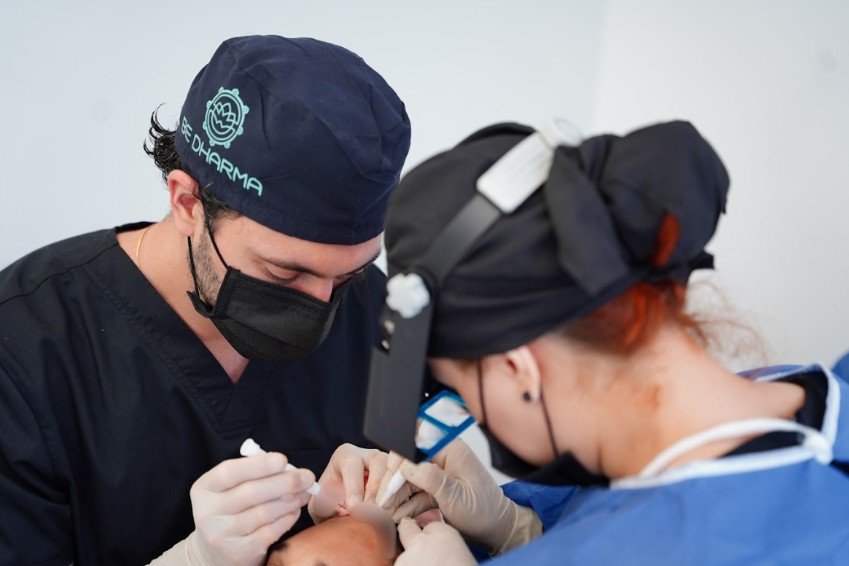
When a patient begins looking for a hair transplant clinic, it is easy to focus only on before-and-after photos or on the promise of fuller hair. However, trust should be built on much more than visual marketing. A clinic deserves confidence when it approaches hair restoration as a medical and aesthetic decision, not as a one-size-fits-all service. That means taking the time to understand why hair loss is happening, what the donor area can realistically provide, and what kind of result can be achieved in a way that still looks natural over time.
For that reason, choosing a clinic should never be reduced to price alone. A well-qualified hair transplant clinic in Medellín should evaluate the patient carefully, plan the procedure with precision, and explain each step with clarity. Just as importantly, it should know when a FUE hair transplant is appropriate, how to integrate it into a long-term strategy, and how to protect both safety and aesthetics throughout the entire process.
Medical Evaluation Before Recommending a Hair Transplant
A proper hair restoration journey should always begin with a medical evaluation. In my experience, this is one of the clearest signs that a clinic takes the procedure seriously. Hair loss can happen for many reasons, and not every patient with thinning hair is automatically ready for surgery. Before recommending any treatment, a clinic should assess the pattern of hair loss, the condition of the scalp, the patient’s medical history, and whether the hair loss appears stable enough for a surgical approach.
This first assessment also helps determine whether the patient is a strong candidate for transplantation at all. In other words, the goal is not simply to move forward with a procedure, but to decide whether surgery is appropriate, whether medical treatment should come first, or whether expectations need to be adjusted. A trustworthy hair transplant clinic understands that a correct diagnosis is the foundation of a good result.
Personalized Treatment Planning for Each Patient
No two patients lose hair in the same way. Some are concerned about a receding hairline, while others notice diffuse thinning or reduced density in the crown. In addition, hair texture, caliber, scalp contrast, and donor density all influence the result. Because of this, I believe one of the most important qualities in a clinic is the ability to individualize the plan rather than repeat the same formula for every case.
A personalized plan should consider both medical and aesthetic goals. It should answer practical questions such as how many areas need to be addressed, how conservative or defined the hairline design should be, and what kind of density can be pursued without compromising future options. The best clinics do not plan only for the day of the procedure; they also think ahead, protecting the long-term harmony of the result.
Why a Clinic Should Know When FUE Is the Right Option
A modern clinic should not only offer advanced techniques; it should also know when and how to use them wisely. A FUE hair transplant is one of the most requested options in hair restoration because it allows follicular units to be extracted individually and transplanted with a high level of precision. Even so, recommending FUE should never be automatic. It must be based on the patient’s donor area, the degree of hair loss, the goals of the procedure, and the overall surgical plan.
That is why clinical judgment matters so much. A reliable hair transplant clinic in Medellín should be able to explain why FUE is a good option in a specific case, what it can realistically achieve, and how it fits into a broader restoration strategy. When this explanation is clear and medically grounded, the patient can make a more informed decision rather than choosing a technique simply because it is popular.
Safety, Hygiene, and Professional Standards
Trust is also built through safety. No matter how advanced a treatment may sound, it should take place in an environment with clear hygiene measures, professional protocols, and structured follow-up. In my opinion, this is non-negotiable. A clinic should be prepared not only for the technical side of the procedure, but also for patient care before, during, and after surgery.
This includes organized evaluation, careful handling of grafts, proper clinical standards, and clear postoperative guidance. It also means the patient should know what to expect during recovery, how to care for the scalp, and when follow-up appointments are necessary. A clinic that values safety does not improvise; it creates an experience that feels controlled, professional, and reassuring from beginning to end.
Natural-Looking Results as a Sign of Good Planning
Ultimately, one of the best indicators of a well-planned transplant is that the result does not look artificial. In hair restoration, naturalness is not a secondary detail; it is one of the main measures of quality. Covering an area with more hair is not enough if the hairline looks harsh, the density is poorly distributed, or the design does not fit the patient’s facial features and long-term hair loss pattern.
For that reason, I see natural-looking results as a sign of intelligent planning rather than simple technical execution. A good hair transplant clinic understands that hair restoration is about recreating balance, proportion, and realism. When a clinic respects those principles, it does more than transplant hair; it helps restore confidence in a way that feels authentic to the patient.
Why FUE Technique and Advanced Technology Matter in a Hair Transplant Clinic
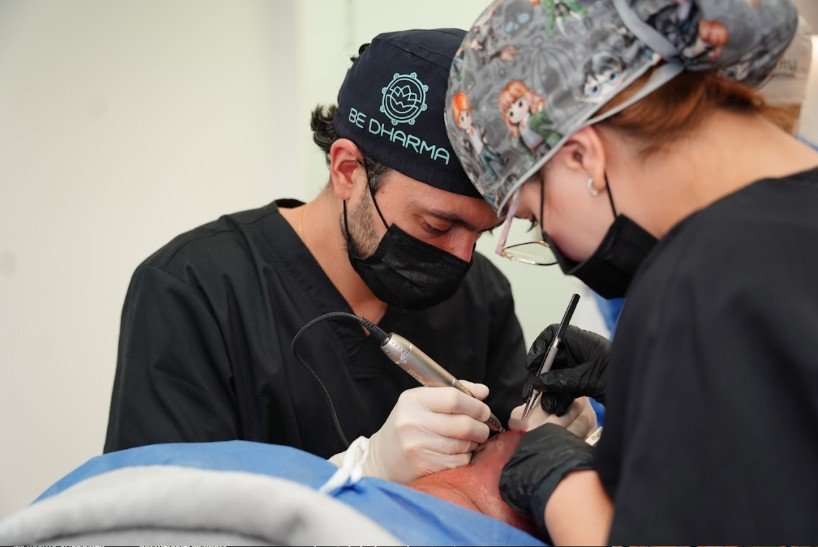
When patients begin researching a FUE hair transplant, they are often drawn to the idea of a modern technique and natural-looking results. That makes sense. The technique alone is never the full story. What truly shapes the outcome is how well that technique is planned, how carefully each graft is handled, and whether the clinic has the medical judgment to use technology with precision rather than rely on it as a marketing claim.
- FUE is one of the most requested hair restoration techniques today.
- It works by extracting follicular units one by one from the donor area.
- Every stage matter: extraction, preservation, design, and implantation.
- A good hair transplant clinic in Medellín should not only offer FUE, but perform it with consistency, planning, and clinical criteria.
What Is a FUE Hair Transplant?
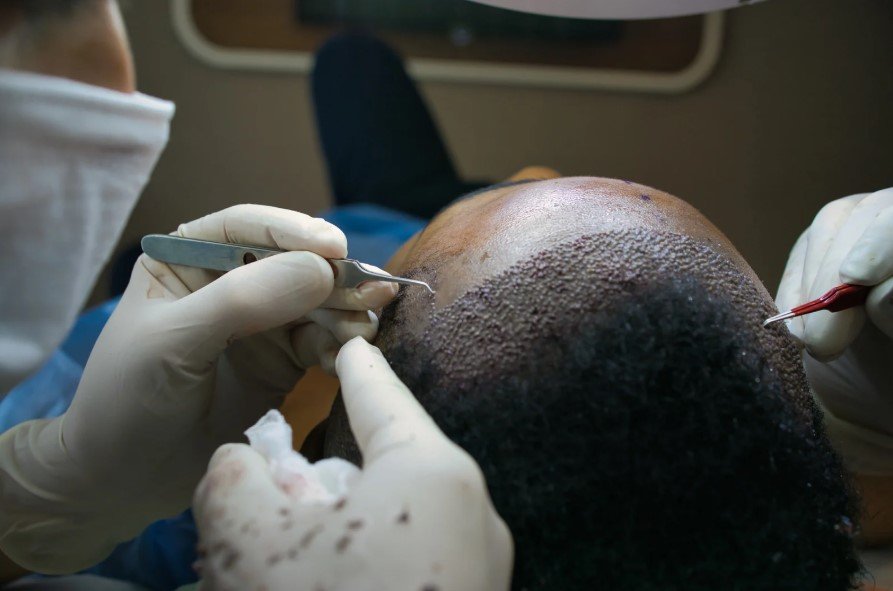
A FUE hair transplant refers to Follicular Unit Extraction, a technique in which individual follicular units are removed from the donor area—usually the back or sides of the scalp—and then implanted into areas affected by thinning or hair loss. Each follicular unit may contain one, two, three, or sometimes more hairs, which is why the way these grafts are selected and placed has such an important effect on the final appearance.
What makes FUE especially appealing is that it allows the procedure to be carried out with a high level of detail. Rather than removing a strip of scalp, the follicles are harvested individually. As a result, the approach can be more refined from both a technical and aesthetic perspective, especially when the goal is to create soft, natural transitions in visible areas such as the frontal hairline.
How Does the FUE Technique Work?
Although the process may sound simple at first, it depends on several carefully coordinated steps. When I explain FUE to patients, I usually break it down this way:
Step 1: Donor area assessment
The first step is evaluating the donor zone to understand how much healthy hair is available and how it can be used responsibly.
Step 2: Individual graft extraction
Follicular units are extracted one by one with specialized instruments. At this stage, precision is essential to preserve the integrity of each graft.
Step 3: Graft preservation
Once removed, the follicles must be protected and handled properly so they remain viable before implantation.
Step 4: Recipient site design
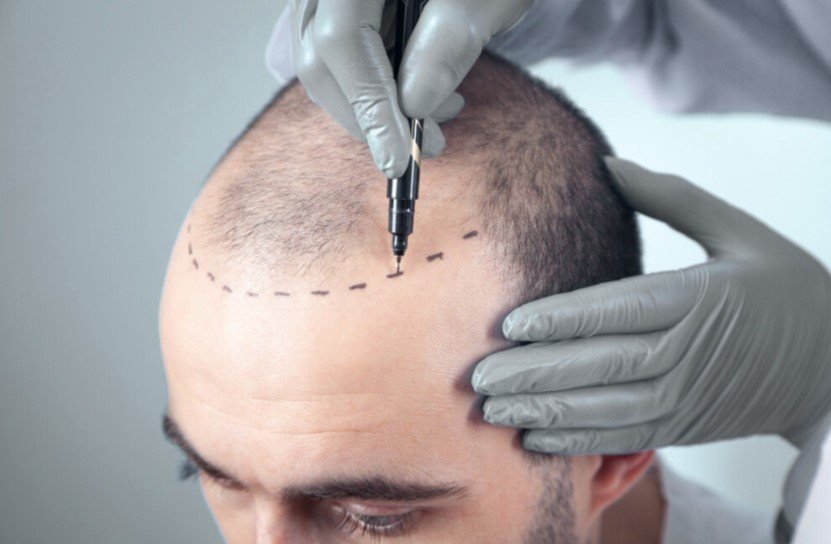
The receiving area is planned based on the patient’s pattern of hair loss, facial proportions, and long-term goals.
Step 5: Implantation
The grafts are then placed into thinning or bald areas with attention to angle, direction, and density.
In other words, FUE is not just about moving hair from one place to another. It is a detailed restorative process in which every step influence survival, growth, and naturalness.
Why FUE Is One of the Most Requested Hair Restoration Techniques
There is a reason why FUE has become one of the most sought-after options in modern hair restoration. First, it offers a precise way to harvest follicles individually, which helps support customized planning. Second, many patients appreciate that the technique is commonly associated with a more discreet healing pattern compared to older strip-based approaches. And third, it gives the clinical team more flexibility when designing the transplant according to the patient’s specific needs.
That said, popularity should never be confused with universality. FUE is highly valuable, but it still needs to be recommended for the right reasons. A trustworthy hair transplant clinic should explain not only why FUE is attractive, but also why it is appropriate—or not appropriate—for a particular patient.
The Role of Precision in Extraction and Implantation
If I had to highlight one concept that defines the quality of a FUE procedure, it would be precision. Every follicular unit is delicate. If extraction is too aggressive, the graft may be damaged. If preservation is poor, viability may be reduced. If implantation is rushed or poorly designed, the result may look unnatural even if the grafts survive.
That is why precision matters in at least three ways:
- Protecting graft quality: healthy follicles are the foundation of the result
- Designing a believable hairline: density alone is not enough without proper angle and direction
- Distributing grafts strategically: the transplant should look balanced both now and in the future
A well-executed FUE hair transplant depends on disciplined technique, not just equipment.
How Advanced Technology Supports Better Planning and Results
Advanced technology can play an important role in hair restoration, especially when it improves diagnosis, planning, extraction control, and procedural consistency. In a well-prepared clinical setting, technology may help the team assess the scalp more thoroughly, organize the procedure more efficiently, and support a higher level of precision during key stages of treatment.
Still, I always believe this point deserves emphasis: technology is a support system, not a substitute for medical judgment. A device does not create a natural hairline on its own. A machine does not decide how to preserve donor capacity for the future. Those decisions come from experience, planning, and aesthetic understanding. For that reason, the best results usually come from clinics that combine advanced tools with a strong medical and artistic approach.
How to Choose the Best Hair Transplant Clinic in Medellín
Choosing the best hair transplant clinic in Medellín is about much more than finding a place that offers the procedure. In my opinion, the right decision comes from understanding how a clinic thinks, how it evaluates each case, and how seriously it takes both the medical and aesthetic sides of hair restoration. While marketing can be persuasive, what truly matters is whether the clinic can explain its process with clarity and support that process with sound clinical judgment.
If you are considering a FUE hair transplant, it helps to approach the decision with the right questions in mind. A trustworthy clinic should be able to evaluate your hair loss pattern, assess the quality of your donor area, explain what can realistically be achieved, and show that the procedure is being planned with long-term balance in mind. In other words, the best choice is not always the clinic with the loudest message, but the one with the clearest standards.
Before choosing a clinic, ask yourself:
- Does the clinic begin with a real medical evaluation?
- Are treatment recommendations personalized or generic?
- Can they explain how they plan a FUE hair transplant?
- Do they discuss aftercare and follow-up clearly?
- Do they prioritize natural, long-term results?
Review of the Clinic’s Medical Approach
A strong medical approach should always come first. That means the clinic is not simply offering a procedure but evaluating whether that procedure is right for you. Hair restoration should begin with an assessment of your scalp, the type and progression of your hair loss, the strength of the donor area, and your overall expectations. Without that foundation, even advanced treatment may be poorly indicated or poorly planned.
This is especially important because hair loss is not the same in every patient. Some people need conservative restoration, while others need a broader strategy that takes future hair loss into account. For that reason, I believe the best hair transplant clinic is one that treats diagnosis as part of the treatment itself rather than as a quick formality.
Look for Personalized Assessments, Not Generic Solutions
One of the clearest signs of quality is personalization. A clinic should not speak to every patient in the same way, because no two cases are truly identical. Hairline shape, facial features, hair characteristics, donor supply, and aesthetic goals all influence how the procedure should be planned. Therefore, a clinic that offers the same approach to everyone often misses one of the most important principles in hair restoration: individualization.
A personalized assessment also helps create realistic expectations. Instead of promising a generic transformation, a good clinic explains what is possible in your specific case and why. That kind of clarity builds trust because it shows that the recommendation is based on your anatomy and your goals, not on a standard sales script.
Ask How the Clinic Plans a FUE Hair Transplant
It is not enough to ask whether a clinic performs FUE. You also need to ask how the team plans the procedure. A well-prepared clinic should be able to explain how it evaluates the donor area, how it estimates graft distribution, how it designs the hairline, and how it protects naturalness throughout the process.
That conversation matters because a FUE hair transplant is not defined only by extraction. It also depends on preservation, implantation strategy, and aesthetic judgment. If a clinic cannot clearly explain how those decisions are made, then it may be difficult to feel fully confident about the treatment plan.
Evaluating the Clinical Setting and Technology
The environment where the procedure takes place also matters. A reliable hair transplant clinic in Medellín should offer a professional clinical setting, structured protocols, and technology that supports precision and planning. Patients often focus on equipment, and while advanced tools can certainly help, they should never be considered in isolation.
What matters most is how those tools are used. Technology should support diagnosis, procedural control, and consistency, but it must be guided by medical expertise. For that reason, I always believe patients should assess the full picture: the environment, the systems, the standards, and the professionals behind the treatment.
Choose a Clinic Focused on Natural, Long-Term Results
Ultimately, the best hair transplant clinic is one that looks beyond immediate density and focuses instead on natural, long-term results. A transplant should fit the patient’s face, age, hair pattern, and future evolution. When planning is too aggressive or too superficial, the result may look unnatural or may not age well overtime.
For that reason, I believe naturalness is one of the most important signs of quality. A clinic that respects proportion, realism, and long-term harmony is far more likely to deliver a result that feels convincing and balanced. And when you are choosing the best hair transplant clinic in Medellín, that mindset can make all the difference.
Why Many Patients Choose Medellín for Hair Restoration
Medellín has become an appealing city for patients who want a more structured and professional approach to aesthetic and medical care. In recent years, many people have looked to the city not only for innovation and modern clinical environments, but also for a style of care that feels more personalized and carefully planned. In the field of hair restoration, that combination can be especially valuable, since successful treatment depends far more than the procedure itself.
For local patients, Medellín offers access to clinics that combine medical evaluation, technology, and a more specialized patient experience. At the same time, it is also a city that attracts people from other regions and from abroad who want treatment in a professional setting with a strong clinical focus. As a result, many individuals searching for a hair transplant clinic in Medellín are not simply looking for convenience; they are looking for a place where the process feels thoughtful, organized, and trustworthy.
Why Medellín Stands Out for Hair Restoration
- A growing reputation in medical and aesthetic care
- Access to clinics with advanced technology and personalized attention
- A professional setting for both local and international patients
- A strong environment for procedures such as FUE hair transplant
A City with a Growing Medical and Aesthetic Profile
One reason Medellín stands out is that it has developed a strong reputation for medical and aesthetic services delivered in a more modern and patient-centered way. This matters in hair restoration because patients often want more than just treatment availability; they want confidence in the setting where their care will take place.
That is why the city appeals to people who value planning, communication, and professionalism. In my view, those elements are essential when considering any hair restoration procedure, especially one that requires detailed design and long-term follow-up.
A Better Fit for Patients Seeking Personalized Care
Many patients are not just looking for a clinic that performs procedures; they are looking for one that takes the time to understand their case. Medellín can be attractive for that reason. A well-qualified clinic in this environment is often positioned to offer more individualized experience, from the first consultation to the postoperative period.
This becomes even more relevant for patients considering a FUE hair transplant, since successful outcomes depend heavily on donor evaluation, procedural planning, and aesthetic judgment. When those steps are handled with care, the overall experience tends to feel much more reassuring.
A Valuable Option for Local, National, and International Patients
Another advantage is that Medellín can work well for different types of patients. Some live in the city and want access to specialized care close to home. Others travel from different parts of Colombia in search of a clinic with stronger standards or a more refined approach. In addition, international patients may also find value in choosing a city where medical and aesthetic services are increasingly organized around quality, coordination, and patient support.
For that reason, the search for the right hair transplant clinic often leads patients to think not only about the procedure, but also about the setting. The city itself becomes part of the decision because it shapes the overall experience of evaluation, treatment, and follow-up.
Why Choose Dharma Hair as Your Hair Transplant Clinic in Medellín?
When patients come to this blog looking for real answers, they are usually not searching for a generic promise. They want to know where they can feel understood, properly evaluated, and guided with honesty. That is exactly why I recommend Dharma Hair as a strong option for anyone looking for a hair transplant clinic in Medellín. Dharma Hair was created as the hair transplant line of Clínica Be Dharma, with the goal of offering high-level hair restoration solutions through medical diagnosis, personalized treatment planning, and advanced technology for both men and women seeking real, natural-looking, and long-lasting results.
What I value most about this approach is that it does not begin with the procedure itself, but with understanding the patient first: the pattern of hair loss, the donor area, the aesthetic goals, and the most appropriate way to move forward. For patients considering a FUE hair transplant, that kind of planning makes a meaningful difference, because it helps create results that are not only technically well executed, but also balanced and believable over time. In addition, Dharma Hair is in Torre Médica de Oviedo, a setting that reinforces the sense of professionalism, comfort, and clinical structure many patients are looking for when starting this kind of process.
Frequently Asked Questions About Choosing a Hair Transplant Clinic in Medellín
What is a FUE hair transplant?
A FUE hair transplant is a hair restoration procedure in which individual follicular units are extracted from the donor area, usually the back or sides of the scalp, and then implanted into areas affected by thinning or hair loss. This technique is widely used because it allows for a precise and personalized approach. However, the quality of the result depends not only on the technique itself, but also on the medical evaluation, the planning of the procedure, and the experience of the clinic performing it.
How do I choose the best hair transplant clinic in Medellín?
Choosing the best hair transplant clinic in Medellín means looking beyond advertising. A trustworthy clinic should begin with a proper medical evaluation, assess your donor area carefully, explain whether you are a good candidate for a transplant, and offer realistic guidance about what can be achieved. It is also important to evaluate the clinic’s professional standards, the level of personalization in the treatment plan, the technology available, and the quality of postoperative follow-up.
Why is medical evaluation important before a hair transplant?
Medical evaluation is essential because not every patient with hair loss should move directly to surgery. A proper assessment helps determine the cause and pattern of hair loss, the quality of the donor area, and whether the condition is stable enough for a transplant. It also helps define whether a FUE hair transplant is the right option or whether the patient may benefit from a different strategy first. In short, a good diagnosis is what turns a procedure into a well-planned treatment.
What should I look for in a hair transplant clinic?
A reliable hair transplant clinic should offer much more than the procedure itself. It should provide medical diagnosis, personalized treatment planning, clear communication, strong hygiene and safety protocols, and structured follow-up after the transplant. Just as importantly, the clinic should focus on natural-looking results and long-term harmony, rather than offering a generic or overly aggressive solution.
Does every patient with hair loss need a FUE hair transplant?
No. Although a FUE hair transplant is one of the most requested techniques today, it is not automatically the right choice for every patient. The best approach depends on several factors, including the type of hair loss, the quality of the donor area, the patient’s goals, and the long-term outlook of the case. A trustworthy clinic should know when FUE is appropriate and when a different plan may be more reasonable.
Why does donor area evaluation matter so much?
The donor area is one of the most important parts of hair transplant planning because it provides the follicles that will be moved to areas with less hair. If the donor zone is not evaluated carefully, the clinic may overestimate what can be achieved or compromise future options. A good hair transplant clinic in Medellín should assess donor density, hair quality, and long-term preservation before planning any procedure.
Does technology improve FUE hair transplant results?
Advanced technology can improve planning, precision, and consistency during a FUE hair transplant, but it should always be guided by medical judgment. Technology may support donor analysis, extraction control, and procedural organization; however, it does not replace experience, aesthetic sense, or clinical decision-making. The best results usually come from clinics that combine advanced tools with individualized planning and a strong medical approach.
Why do many patients choose Medellín for hair restoration?
Many patients choose Medellín because the city has become increasingly recognized for its professional medical and aesthetic services. People often look for a hair transplant clinic in Medellín when they want a setting that combines technology, personalized care, and a structured clinical environment. For both local and international patients, Medellín can offer a more organized and reassuring experience when starting a hair restoration process.
Can both men and women be candidates for hair restoration?
Yes. Both men and women may be candidates for hair restoration, although the treatment plan should always be individualized. Hair loss patterns, donor characteristics, and aesthetic goals can vary significantly between patients, which is why personalized evaluation is so important. A clinic that treats both men and women with the same level of medical attention and planning is often better prepared to offer a more suitable recommendation.
Why choose Be Dharma Hair in Medellín?
Be Dharma Hair is the hair transplant line of Clínica Be Dharma, created to offer high-level hair restoration solutions in Medellín through medical diagnosis, personalized planning, and advanced technology. For patients looking for a hair transplant clinic that values real, natural-looking, and long-lasting results, this type of approach can make a meaningful difference. Its location in Torre Médica de Oviedo also reinforces the professional and well-structured environment many patients are looking for when considering a FUE hair transplant.