If you’re considering nose surgery, one of the first fears I hear in consultation is simple: “Will I end up with a visible rhinoplasty scar?” It’s a fair question—your face is the first thing people see, and nobody wants a result that looks “operated.” The truth is that scarring is not a single outcome; it depends on the surgical approach (open vs. closed), your anatomy and skin characteristics, how your body heals, and—most importantly—the level of precision and tissue respect used during surgery.
In my practice, I prioritize safety and natural-looking results, and that includes planning every step to keep scars as discreet as possible. When appropriate, I use ultrasonic rhinoplasty (also known as piezo/ultrasonic technique), a modern approach that allows me to shape nasal bones with high precision and less trauma to surrounding tissues—creating a cleaner healing environment and, in many cases, helping scars remain minimal. In this article, I’ll explain where scars can appear, what “normal” healing looks like, and what you can realistically expect throughout recovery.

What a “Rhinoplasty Scar” Really Means: Where Scars Can Appear (and why)
When patients tell me they’re worried about a “scar,” they usually mean one of two things: a visible line on the outside of the nose, or signs of healing that feel like scarring (firmness, swelling, uneven texture) even when there’s no external mark. In other words, a rhinoplasty scar can be either external (seen on the skin) or internal (incisions inside the nose that heal without being visible). Clarifying this from the start matters, because many concerns are about normal healing changes—not a permanent, noticeable scar.
Open Rhinoplasty Scar (Columella): Small, Central, and Usually Discreet
In an open rhinoplasty, I make a small incision across the columella—the narrow strip of skin between the nostrils. This is the only external incision in the open approach, and it’s placed where it naturally hides in shadow and anatomy. Early on, it can look like a thin line that’s pink or slightly firm; that’s normal. Over the following weeks and months, as the tissue calms down and remodels, it typically becomes flatter and lighter, often blending so well that it’s difficult to notice unless someone is specifically looking for it.
Closed Rhinoplasty Scars: Internal Incisions, No External Mark
With closed rhinoplasty, the incisions are made inside the nostrils. That means there is no visible external scar at all. However, internal incisions still go through a healing process—so patients may experience temporary swelling or firmness as tissues recover. This is why I always explain that “no external scar” doesn’t mean “no healing phase.” It simply means the healing happens out of sight.
Alar/Base Incisions: When Nostril Reduction Is Needed
Some patients need nostril refinement (alar base reduction) to balance width or shape. In those cases, small incisions may be placed at the base of the nostrils, usually within a natural crease where the nostril meets the cheek. When these are planned carefully and closed precisely, they tend to fade very well because they sit in a natural fold and follow the anatomy rather than cutting across it.
Scar Biology in Plain English: Why Scars Change Over Time
All scars, whether from open rhinoplasty or alar work—follow a predictable healing sequence:
- Inflammation: the early phase where the body starts repairing (often redness, mild firmness, swelling).
- Collagen remodeling: collagen reorganizes to strengthen the area (the scar can look pink and feel firmer for a while).
- Maturation: the scar gradually softens, flattens, and lightens.
A realistic “scar maturation timeline” is measured in weeks to months, not days. In the first few weeks, it’s common for scars to look more noticeable before they look better. Over the next months, most patients see the scar become more subtle as the tissue settles.
One of the most important points I emphasize is that the “best” approach isn’t the one that’s trending—it’s the one that fits your anatomy and surgical objectives. I choose open, closed, and any additional incision strategy based on what will deliver a stable, natural result while keeping any potential scar as discreet as possible. That individualized planning is what protects both the aesthetic outcome and the quality of healing.

How I Minimize Rhinoplasty Scars: Technique, Precision, and Ultrasonic Rhinoplasty
When a patient asks me how I keep a rhinoplasty scar as minimal as possible, my answer is always the same: it’s not one “trick”—it’s a surgical strategy. Scars tend to look better when the tissues are treated with respect, when incisions are planned with intention, and when the nose is rebuilt in a stable way that allows the skin to heal without tension. In practice, that means I focus on a few core principles every single time.
The Surgical Principles That Help Scars Heal Better
Precise incision placement
If an external incision is needed, where it’s placed matters. I plan incision lines to follow natural shadows and anatomical transitions so they’re inherently less visible once healed.
Gentle tissue handling
The nose is delicate. The less the tissue is stretched, crushed, or overheated during surgery, the smoother the healing environment tends to be—and that can translate into less prolonged redness, firmness, and irregular healing.
Controlled bleeding and swelling
Excess bleeding and aggressive swelling create more inflammation. When inflammation is higher than it needs to be, scars can stay red or firm for longer. A careful, controlled technique supports calmer recovery.
Stable structural support to avoid skin tension
This is a detail many people don’t realize: scars don’t only depend on the incision. They also depend on what’s happening underneath. When the nasal framework is stable and well-supported, the skin rests naturally—without being pulled or strained, which helps scars mature more discreetly.
Meticulous closure when an external incision is necessary
If I make an external incision (for example, in open rhinoplasty or alar base refinement), closure is not a “final step.” It’s part of the aesthetic outcome. Layered closure, proper alignment, and minimal tension are key for a fine-line scar.
Ultrasonic Rhinoplasty: Precision That Supports a Cleaner Healing Process
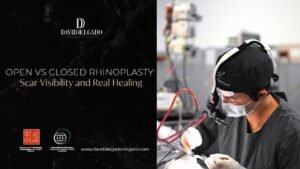
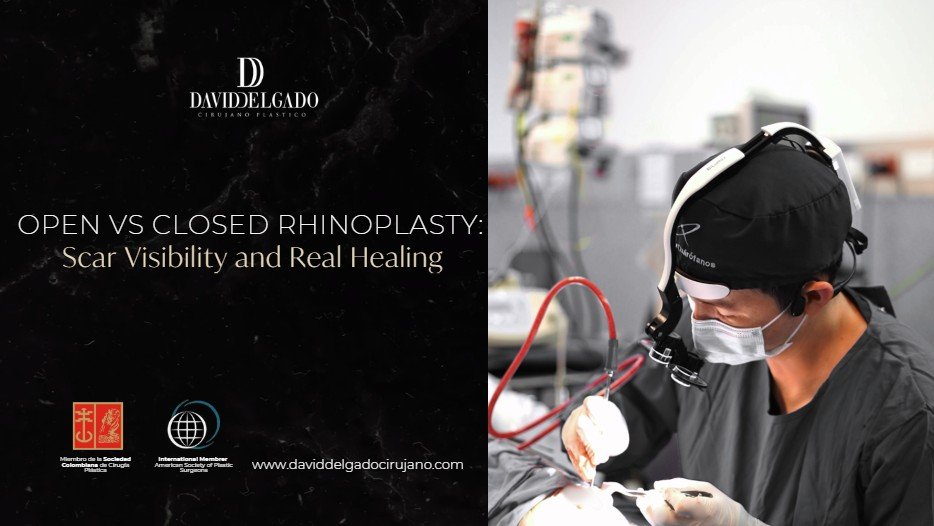
One technique that has made a meaningful difference in modern rhinoplasty is ultrasonic rhinoplasty (piezo/ultrasonic approach). Instead of using traditional instruments that can be less selective in how they affect bone and nearby soft tissue, ultrasonic devices allow me to sculpt and refine nasal bones with high precision.
Ultrasonic instruments use controlled vibrations to shape bones accurately. This is especially valuable when working on the bony bridge, adjusting contour, or refining asymmetries.
Why does it matter scary?
Scars are influenced by the “inflammatory load” of surgery. With ultrasonic rhinoplasty, bone work can be more controlled and potentially less traumatic to surrounding tissues, which often means less unnecessary swelling and bruising. And when swelling and inflammation are better controlled, the healing environment tends to be smoother supporting more discreet external healing when an incision exists, and more comfortable recovery overall.
When it’s especially useful
I find it particularly helpful in cases such as:
- Bony humps that require precise reshaping
- Asymmetries where refined correction matters
- Detailed contouring when the goal is a cleaner, more natural dorsal line
The Outcome Patients Actually Care About
All this technique is not “for the sake of technique.” It’s to achieve what most patients want: a natural look, refined lines, and healing that doesn’t draw attention. In other words, when surgery is precise and tissue-friendly, the result usually looks less like “I had surgery,” and more like “this is how my nose always should have looked.”
Open vs. Closed: Not Better or Worse—More Appropriate
Sometimes a closed approach is ideal because it avoids an external incision altogether. Other times, an open approach gives me better visibility and control for complex structural goals, and the trade-off is a small columellar incision that typically heals very discreetly. My decision is always based on your anatomy, your goals, and what will produce a stable, natural result—not on trends.
You may be interested Natural Rhinoplasty in Colombia – Meet Dr. David Delgado
Healing & Aftercare: What You Can Do to Help a Rhinoplasty Scar Fade Well
Even with excellent surgical technique, healing is a partnership. After surgery, the way you care for your nose can influence how a rhinoplasty scar matures—especially in the first weeks, when inflammation is most active. I guide my patients through recovery with clear instructions and follow-ups because small choices early on can make a noticeable difference later.
What Normal Healing Looks Like (and Why It Changes)
Early swelling and redness
In the first days and weeks, it’s normal to see swelling and, if there is an external incision, a pink tone. This doesn’t mean the scar will stay visible, it means your body is repairing tissue.
Scar softening
As the weeks pass, tissue that initially feels firm usually begins to soften. This is part of the transition from early healing into remodeling.
Color fading and flattening
Over the next months, scars typically become flatter and lighter. Scar maturation is not instant’s gradual process as collagen reorganizes and the skin settles.
Scar Care Basics (Always Surgeon-Guided)
Sun protection is non-negotiable
UV exposure can darken healing skin and make scars more noticeable for longer. Protecting the area from sun is one of the simplest, highest-impact habits during recovery.
Topical care only when appropriate
Some patients benefit from surgeon-approved topical care—often silicone-based options—when timing and incision type make it suitable. The key is not applying random products too early or too aggressively.
Avoid friction and pressure on incision areas
Rubbing, pulling, or applying pressure can irritate healing tissue. This includes being careful with glasses (if applicable), towels, and any habits that unintentionally stress the area.
Keep your follow-ups
Follow-ups are not just “routine.” They allow me to monitor scar evolution, guide scar support when needed, and catch small issues early—before they become bigger ones.
What Can Make a Scar Look Worse
- Smoking or nicotine exposure: nicotine affects circulation and can impair healing quality.
- Poor sun protection increases pigmentation risk and prolonged discoloration.
- Ignoring instructions: especially splint/tape guidance or returning to intense activity too soon, which can increase swelling and inflammation.
When to Contact Your Surgeon
While most healing changes are normal, I want patients to reach out if they notice:
- Abnormal thickening that seems to worsen rather than improve
- Persistent redness that keeps intensifying over time
- Discharge, fever, or signs of infection
- Worsening pain that feels out of proportion
- Asymmetry that appears suddenly or changes abruptly
My goal is always the same: a result that looks natural and heals quietly. With the right surgical plan and disciplined aftercare, most patients find that scarring becomes a minor detail—rather than the defining story of their rhinoplasty.
You may be interested Nose Job in Colombia – The Ultimate Guide to Rhinoplasty with Dr. David Delgado
Why I’m a Trusted Choice for Rhinoplasty When Your Priority Is Minimal Scarring?
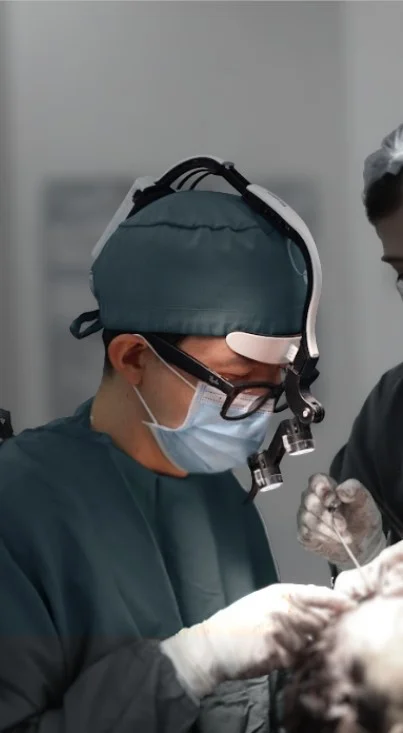
When you choose a rhinoplasty surgeon, you’re not only choosing an aesthetic result, you’re choosing how safely and predictably your nose will heal, including how discreet a rhinoplasty scar can become. In my approach, everything starts with expert planning: I perform a detailed facial and nasal analysis to decide which technique best balances natural aesthetics, breathing function, and the lowest possible risk of visible scarring. I’m very technique-driven, and I prioritize precision and tissue preservation; that’s why, when it’s indicated, I incorporate ultrasonic rhinoplasty to shape bone more accurately while minimizing unnecessary trauma to surrounding tissues.
I’m also transparent from the beginning—healing takes time, scars evolve over weeks and months, and there are factors we can control and others we can’t, so I explain expectations clearly rather than promising perfection. Finally, I stay close to my patients throughout recovery with structured follow-ups, scar monitoring, and education at each step. And if you’re traveling to Medellín for surgery, I make the process straightforward with clear communication, coordinated planning, and guidance that supports you before and after you return home. If you’re considering rhinoplasty and want an honest evaluation of your options, scar risk, and expected evolution, I’d be glad to guide you through a personalized assessment.
Frequently Asked Questions About Rhinoplasty Scar
1) Will I have a visible rhinoplasty scar after surgery?
It depends on the approach and on whether additional nostril refinement is needed. With a closed rhinoplasty, incisions are inside the nostrils, so there is no visible external scar. With an open rhinoplasty, there is a small incision on the columella (the skin between the nostrils) that typically heals as a fine line and becomes increasingly discreet over time. If an alar base reduction is performed (nostril narrowing), small scars may be placed in natural creases where they usually fade well.
2) Where is the scar in open rhinoplasty, and why is it usually hard to notice?
In open rhinoplasty, the external incision is located on the columella, a naturally shaded and small area. When it’s designed correctly and closed meticulously, it tends to heal as a thin line. Early on it can look pink or slightly firm, but as scar maturation progresses over the following months, it typically softens, flattens, and blends into the surrounding skin.
3) How long does a rhinoplasty scar take to fade?
Scar maturation is gradual. Most patients see the biggest improvements over the first few months, but the scar can continue refining for up to a year (and sometimes longer). In the early weeks, it’s normal for scars to appear more noticeable before they look better—this is part of the natural healing sequence as collagen remodels and the skin settles.
4) Does ultrasonic rhinoplasty help reduce scarring?
Ultrasonic rhinoplasty doesn’t “erase” scars, but it can support a cleaner healing environment in many cases because it allows very controlled bone work with less unnecessary trauma to surrounding tissues. When swelling, bruising, and inflammation are better controlled, healing often progresses more smoothly, which can indirectly help incisions heal more discreetly when an external incision is used.
5) Is closed rhinoplasty always the best option to avoid a visible scar?
Closed rhinoplasty can be a great option for the right candidate because it avoids an external incision. However, it’s not automatically “better.” In some cases, an open approach provides improved visibility and control for structural refinement or more complex goals. My priority is always the most stable, natural, and safe result—choosing the approach that fits your anatomy and objectives, not a one-size-fits-all preference.
6) What does normal scar healing look like in the first weeks?
In the first day to weeks, swelling is expected, and if there is an external incision, mild redness or firmness can be normal. This doesn’t mean the scar will remain noticeable. As inflammation decreases and collagen reorganizes, the scar typically becomes softer, flatter, and lighter. Healing isn’t linear—some days look better than others—but the overall trend is improvement.
7) What can I do at home to help my rhinoplasty scar heal well?
The most important steps are following your surgeon’s instructions precisely, protecting the area from sun exposure, and avoiding unnecessary friction or pressure. Depending on your case and timing, surgeon-approved topical care (often silicone-based) may be recommended. Follow-up appointments are also essential, because they allow early guidance and scar monitoring while your tissues are still actively remodeling.
8) What can make a rhinoplasty scar look more noticeable?
Several factors can affect scar appearance, including nicotine exposure (smoking/vaping), unprotected sun exposure (which can lead to prolonged discoloration), irritation or rubbing of the incision area, and ignoring recovery instructions (for example, returning to intense activity too soon). Individual tendencies also matter—some skin types are more prone to prolonged redness or thicker scarring.
9) Can a rhinoplasty scar become raised or thick?
It’s uncommon, but it can happen in people with a tendency toward thicker scaring. Early firmness is often normal, especially in the first weeks, but a scar that continues to thicken or becomes increasingly raised should be evaluated. The good news is that early monitoring and appropriate guidance can help address concerns before they become persistent.
10) When should I contact my surgeon about my scar or healing?
You should reach out if you notice persistent redness that worsens over time, discharge, fever, increasing pain, abnormal thickening that keeps progressing, or a sudden change in shape/asymmetry that appears abruptly. Most post-op changes are part of normal healing, but it’s always better to ask early, especially during the first months when recovery is most active.