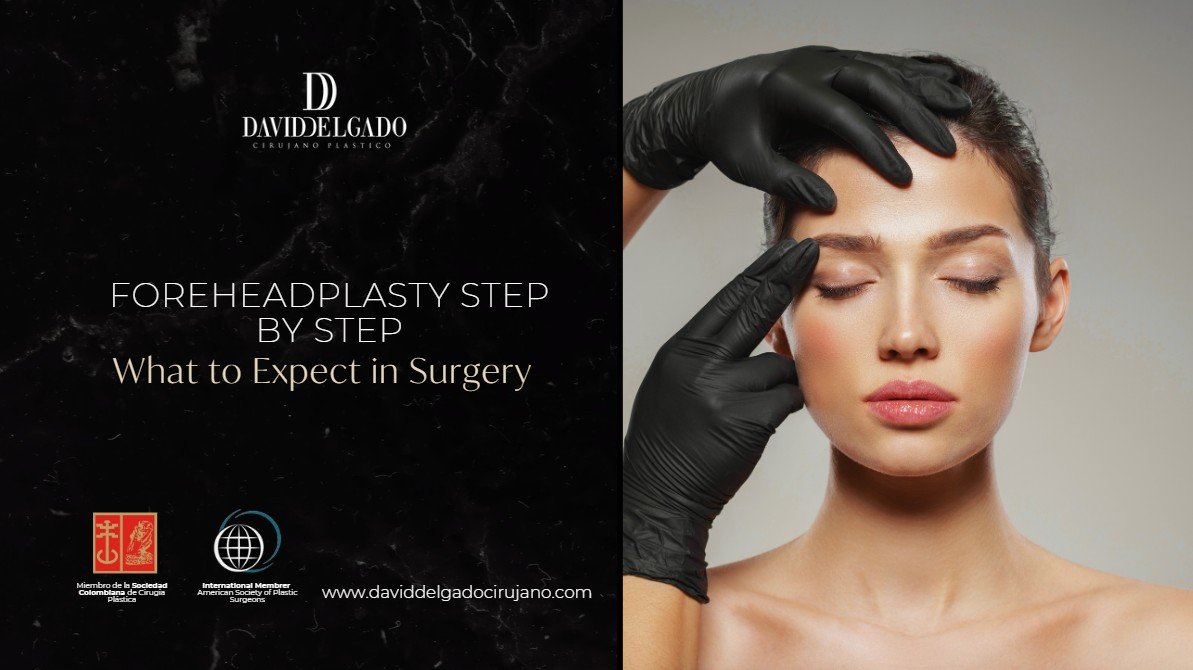
When I meet patients in consultation, one concern often stands out more than others: “My forehead feels too large for my face.” This isn’t about vanity—it’s about proportion, identity, and how you feel every time you look in the mirror or see your reflection. A prominent or overly high forehead can shift the balance of your facial features, making the upper third appear disproportionate compared to the rest of your face.
If this resonates with you, know that you’re not alone—and more importantly, there’s a reliable solution. As a board-certified plastic surgeon in Medellín, I’ve helped countless patients regain confidence through a refined and highly specialized procedure known as foreheadplasty.
Far from being a superficial cosmetic tweak, foreheadplasty is a powerful surgical technique designed to bring facial harmony into focus by lowering the hairline and reducing forehead height. Through careful planning, artistic design, and precise execution, this surgery restores balance to the face—often with subtle but transformative results.
In this blog, I’ll walk you through the step by step foreheadplasty process from my perspective as a surgeon. You’ll understand not just what happens, but why each step is important. Whether you’re considering this surgery or simply exploring options, my goal is to provide you with clear, medical-based information—so you can make informed decisions with confidence.
Table of Contents
What Is Foreheadplasty and Who Is It For?
Foreheadplasty, also known as hairline lowering surgery, is a surgical procedure that reduces the vertical height of the forehead by advancing the hairline downward. While it may sound like a purely aesthetic adjustment, it’s actually a powerful tool to restore facial symmetry and enhance overall balance—especially when the upper third of the face appears disproportionately large.
In my practice, I approach this procedure with both surgical precision and artistic sensitivity, because it’s not just about measurements—it’s about how each element of your face works together to express who you are.
A step by step foreheadplasty can benefit patients with naturally high foreheads, especially those who feel their facial features are thrown off balance by this single aspect. The ideal candidate is someone who:
- Is not experiencing significant hair loss or male-pattern baldness, since a stable hairline is essential for predictable results.
- Desires better proportion between the upper, middle, and lower thirds of the face, particularly when the forehead is out of alignment with the rest of their features.
- Has good scalp elasticity, which allows the hair-bearing portion of the scalp to be advanced forward without excessive tension.
This procedure offers several key benefits:
- It enhances facial harmony by bringing the hairline into a more natural and balanced position.
- The incision is placed discreetly at the junction between the forehead skin and hair-bearing scalp—often using a trichophytic technique, which encourages hair to grow through the scar, making it virtually invisible.
- Many of my patients report a significant boost in confidence after surgery, simply because their face feels more “right” to them—more aligned with how they envision themselves.
Foreheadplasty can also be strategically combined with a brow lift to further improve facial aesthetics. This dual approach not only reduces forehead height but also refreshes the position of the brows, creating a more youthful, open expression without additional incisions.
Ultimately, foreheadplasty isn’t just about lowering the hairline—it’s about restoring proportion, boosting self-esteem, and helping you feel in control of your appearance again.
The Complete Foreheadplasty Process – Step by Step
If you’re considering this surgery, it’s important to understand exactly what the process involves—from the very first consultation to the results. In my practice, every step is handled with meticulous care and surgical precision to ensure safety, aesthetic excellence, and a natural outcome.
This is the full step by step foreheadplasty process I follow with each patient, combining medical expertise with artistic detail.
Step 1: Personalized Consultation
Every successful surgery begins with a thorough understanding of the patient’s anatomy, goals, and expectations. During our first meeting—either in-person at my office in Medellín or via a virtual consultation for international patients—I conduct a detailed facial analysis to evaluate:
- The current height of the forehead
- Hairline stability and direction of growth
- Scalp elasticity and previous surgical history
- Proportions between facial thirds (upper, mid, and lower)
This consultation isn’t just a checklist, it’s a conversation. I take time to listen to your concerns and guide you through the possibilities, all while assessing your candidacy for the procedure. Based on this, I begin planning a customized surgical approach tailored precisely to your anatomy.
Step 2: Hairline Design & Proportion Planning
Creating a natural-looking result depends heavily on how the new hairline is designed. There is both art and science involved here. Using millimetric measuring tools, facial proportion templates, and years of experience, I draw a hairline that:
- Aligns with your gender-specific aesthetic (softer curves for women, more angular lines for men)
- Respects your ethnic features and bone structure
- Follows the natural flow and direction of your hair growth
- Complement the shape of your face, ensuring balance from every angle
The goal is to make it look like you were born with that hairline—not like it was surgically placed.
Step 3: Surgical Marking & Preparation
Before we begin surgery, precise surgical markings are drawn with you in a semi-upright position, simulating how your face is seen in daily life. This step allows me to visualize symmetry in a realistic setting.
I also assess the mobility of your scalp—this is key to determining how much tissue can be advanced forward safely. It’s at this stage that we finalize expectations and confirm how much forehead height can be reduced.
Step 4: Incision Technique
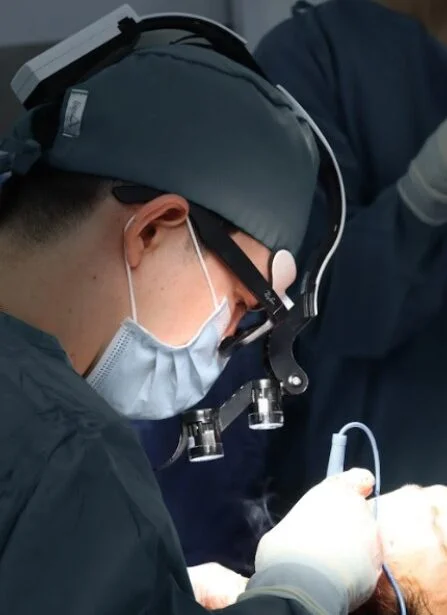
Once in the operating room, I follow the marked hairline to perform a fine surgical incision. The cut is made using a delicate scalpel, carefully navigating through the skin, subcutaneous tissue, and galea aponeurotica dense layer that covers the skull.
Throughout this step, I take great care to preserve surrounding hair follicles, blood vessels, and sensory nerves, which are essential for proper healing, minimal discomfort, and a scar that remains barely noticeable.
Step 5: Scalp Dissection and Mobilization
This is one of the most technical parts of the surgery. I perform a subgaleal dissection, a safe surgical plane between the galea and the periosteum (the membrane covering the bone). This allows me to gently mobilize the scalp without tension, and without compromising the structures that support healing and sensitivity.
This step serves several purposes:
- Enables tension-free advancement of the scalp
- Preserves vascularity, reducing risk of complications
- Maintains nerve integrity, protecting forehead sensation
- Minimizes bleeding, promoting faster recovery
This is where anatomical knowledge and surgical experience truly matter.
Step 6: Skin Resection
Once the scalp is free and mobile, I bring it forward to meet the new hairline design. The excess forehead skin—usually between 1.5 to 3 cm, depending on each patient’s anatomy—is marked and carefully removed.
The key here is balance. I never aim to reduce my forehead to an unrealistic degree. Instead, I focus on achieving natural harmony forehead height that suits your features and ensures long-lasting results without pulling or distortion.
Step 7: Advancing the Hairline
After removing the excess skin, I gently advance the scalp forward, aligning it with the new design. This is a critical point in the procedure where I verify:
- Symmetry from the midline to each side
- Natural placement with no folds or tension
- Smooth transition between scalp and forehead skin
I adjust meticulously before closure to guarantee that the final outcome looks effortless and refined.
Step 8: Multi-layer Closure
To ensure a minimal, nearly invisible scar, I use a multi-layered suturing technique. Deep tissues are closed with absorbable sutures that eliminate tension on the skin’s surface. Then, the outer layer is carefully approximated using fine sutures or surgical glue, depending on the case.
Whenever possible, I perform a trichophytic closure—this technique allows hair to grow through the scar, camouflaging it even further over time.
In the post-operative phase, I provide detailed instructions for scar care, including recommendations for creams, sun protection, and follow-up appointments to monitor healing. With the right care, most scars fade into near invisibility within months.
By following this step-by-step foreheadplasty process, I ensure that each patient receives not only a surgical outcome—but a transformation that feels authentic, empowering, and harmonious.

What Results Can You Expect? Recovery, Scarring, and Long-Term Outcome
One of the most common questions I receive is: “What will my recovery look like, and how noticeable will the scar be?” These are valid concerns—and I’m here to tell you that, with proper planning and care, recovery can be smooth, and scarring often minimal.
Most patients can return to light daily activities within 7 to 10 days after surgery. Mild swelling and bruising around the forehead and scalp area are expected but typically subside significantly in the first two weeks. During your follow-up appointments, I’ll assess your healing and guide you through every stage, ensuring a safe and effective recovery.
You’ll begin to see visible improvements within the first few weeks, but the results emerge gradually over several months. As swelling completely resolves and the skin and hairline settle into their new position, patients begin to appreciate the full effect of the transformation naturally proportioned, balanced, and more harmonious facial profile.
When it comes to scaring, I rely on techniques that allow for the most discreet outcome possible, including trichophytic closure, which encourages hair to grow directly through the incision site. This makes the scar virtually invisible to the naked eye in most cases. With proper post-op care—like avoiding sun exposure, applying scar treatments, and attending scheduled follow-ups—the scar typically fades beautifully over time.
Beyond the physical outcome, one of the most rewarding aspects of this surgery is the emotional transformation I witness in my patients. Many describe a renewed sense of confidence, a more comfortable relationship with their appearance, and even a shift in how they carry themselves in both personal and professional settings.
Thousands of patients, local and international, trust me for natural, artistic transformations—and foreheadplasty is one of the procedures where subtle changes can make a powerful impact.
Unique Surgical Philosophy: Natural Results Without Compromise
As a plastic surgeon, my mission goes far beyond changing appearances—it’s about restoring balance, enhancing identity, and preserving the essence of who you are.
My approach to foreheadplasty is guided by three fundamental pillars:
Anatomical Respect
Every patient’s anatomy is unique, and I take this seriously. Before making any incision or surgical decision, I carefully analyze facial proportions, scalp mobility, and vascular and nerve structures. This ensures a safe and sustainable outcome—never forced or artificial.
Artistic Proportion
Surgery is as much art as it is science. Through years of experience, I’ve developed a trained eye for subtle yet powerful adjustments that make the face look naturally aligned. Whether I’m designing a new hairline or planning tissue movement, aesthetic harmony is always my compass.
Long-Term Aesthetics
I don’t believe in shortcuts. My goal is not only to deliver excellent immediate results but to ensure they stand the test of time. Using techniques like digital surgical planning, precise multilayer closure, and trichophytic incisions, I ensure that your results age gracefully with you.
In every step of the journey, I emphasize patient-centered care. That means listening to your goals, addressing your concerns, and creating a surgical plan that aligns with your vision. Emotional well-being is a core part of every transformation I offer.
Ultimately, my goal is to combine technical excellence with artistic intuition—delivering results that feel like you, only better. In the next section, I’ll share why patients from around the world choose me to perform this highly specialized procedure.
Why Choose Dr. David Delgado for Your Foreheadplasty in Medellín?
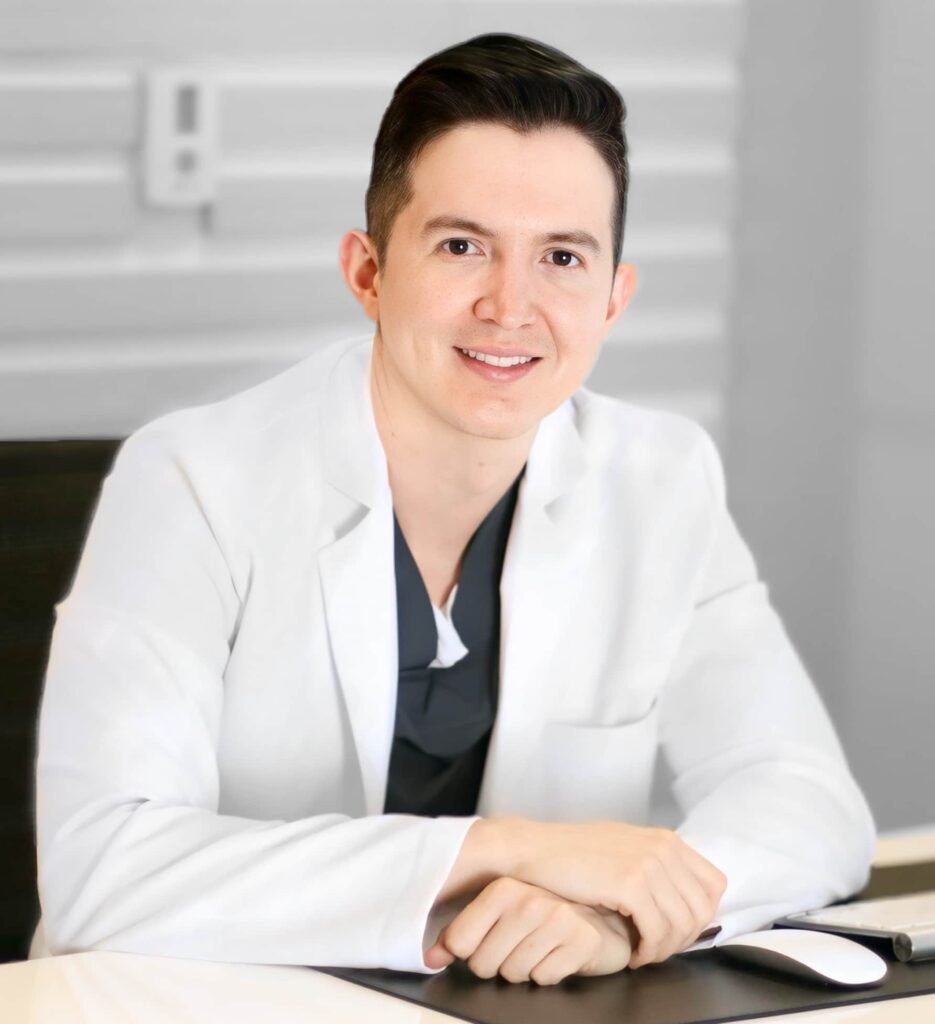
When it comes to choosing the right surgeon for your foreheadplasty, experience, precision, and trust matter. I’m Dr. David Delgado, a board-certified plastic surgeon based in Medellín, Colombia, with extensive expertise in facial harmony procedures, particularly hairline and forehead refinement. My approach blends advanced surgical techniques with artistic precision to ensure natural, balanced results tailored to each individual.
Patients from around the world place their confidence in my care—not only because of the outcomes, but because of the personalized experience I offer. My team is dedicated to making your surgical journey smooth and transparent. With detailed planning, clear communication, and a portfolio of real before-and-after transformations, I invite you to trust your step-by-step foreheadplasty to a specialist recognized both in Colombia and abroad for delivering subtle, yet powerful aesthetic results.
Frequently Asked Questions About Foreheadplasty
1. Will foreheadplasty leave a visible scar?
Yes, as with any surgery, foreheadplasty involves an incision—typically along the natural hairline. However, the technique I use includes trichophytic closure, which allows hair to grow directly through the scar, camouflaging it effectively. With proper care and follow-up, most patients find the scar becomes virtually invisible over time. Factors such as your skin type, healing response, and adherence to post-op care instructions will also influence how the scar fades. My goal is always to achieve the most discreet, natural-looking result possible.
2. How much can the forehead be reduced during surgery?
The amount of reduction depends on several anatomical factors, especially the elasticity of your scalp. In most cases, I can safely lower the hairline by 1.5 to 3 centimeters. However, rather than focusing on maximum reduction, I prioritize facial harmony—achieving a forehead height that suits your unique features. Overcorrection can lead to unnatural tension or even functional issues, so each case is carefully assessed during consultation to ensure results are both safe and aesthetically balanced.
3. Who is a good candidate for foreheadplasty?
The ideal candidate is someone with a naturally high forehead, stable hairline, and good scalp elasticity. You should also be in overall good health and have realistic expectations. Candidates typically do not suffer from significant hair loss or male-pattern baldness, as this can affect the stability of the surgical outcome. During the consultation, I evaluate facial proportions, scalp flexibility, and your medical history to confirm if foreheadplasty is the right procedure for you.
4. How long is the recovery process after foreheadplasty?
Most patients return to normal, non-strenuous activities within 7 to 10 days. Swelling, mild bruising, and tightness around the forehead are expected initially but subside within the first two weeks. Sutures are usually removed around day 7 (if applicable), and post-op care instructions will be provided to support healing. While early results become visible within weeks, full healing and scar maturation can take several months, with optimal results typically appreciated after 3 to 6 months.
5. Can this surgery be combined with other procedures?
Yes, foreheadplasty is often combined with a brow lift, since both procedures share the same surgical access point. Combining them can enhance facial rejuvenation, lifting the brows to a more youthful position while simultaneously lowering the hairline. Other complementary procedures might include eyelid surgery or fat grafting to improve overall facial harmony. During consultation, I’ll discuss the best combination approach based on your goals and facial anatomy.
6. Will I lose sensation in my forehead after surgery?
Temporary numbness in the forehead or scalp is common after foreheadplasty, as small sensory nerves are affected during dissection. In the majority of cases, this sensation gradually returns within a few weeks to a few months. I use careful dissection techniques to preserve as many nerve branches as possible, reducing the likelihood of long-term sensory changes. Permanent numbness is rare but can occur in isolated cases.
7. What happens if I experience hair loss after the surgery?
Foreheadplasty is best suited for individuals with a stable hairline. If you develop hair loss later in life, particularly male-pattern baldness, it could affect the visibility of the scar or alter the balance created by the procedure. However, this risk is evaluated during the initial consultation. If you have a family history of hair thinning, we may consider alternative solutions or combine the surgery with future hair restoration planning. In some cases, a hair transplant can help refine the hairline further down the road.
8. Is foreheadplasty safe for both men and women?
Absolutely. I perform this procedure on both male and female patients, though the approach to hairline design and overall aesthetic goal differs. In women, the hairline is usually rounded and softer, while in men, a straighter, more angular hairline is preferred to maintain a masculine look. Every foreheadplasty is customized based on gender, ethnicity, facial structure, and personal preference, ensuring the results look natural and appropriate.
9. How long do the results of foreheadplasty last?
The results are permanent, as the scalp and hairline are surgically repositioned. Unlike temporary aesthetic treatments, foreheadplasty doesn’t “wear off.” However, natural aging and changes in hair density over the years may subtly affect your appearance. That said, the improvements in facial balance and proportion remain intact, and most patients continue to enjoy the benefits of their surgery for decades.
10. I live outside Colombia—can I still have this procedure done with you?
Yes, I regularly work with international patients who travel to Medellín for foreheadplasty and other facial procedures. My team offers full support for your journey, including virtual consultations, surgical planning, and assistance with accommodation and post-op recovery logistics. Medellín is a growing destination for high-level aesthetic surgery with personalized care, and I make it a priority to ensure that every patient—local or international—receives safe, attentive, and professional treatment from beginning to end.